“Ding! Ding! Ding!”
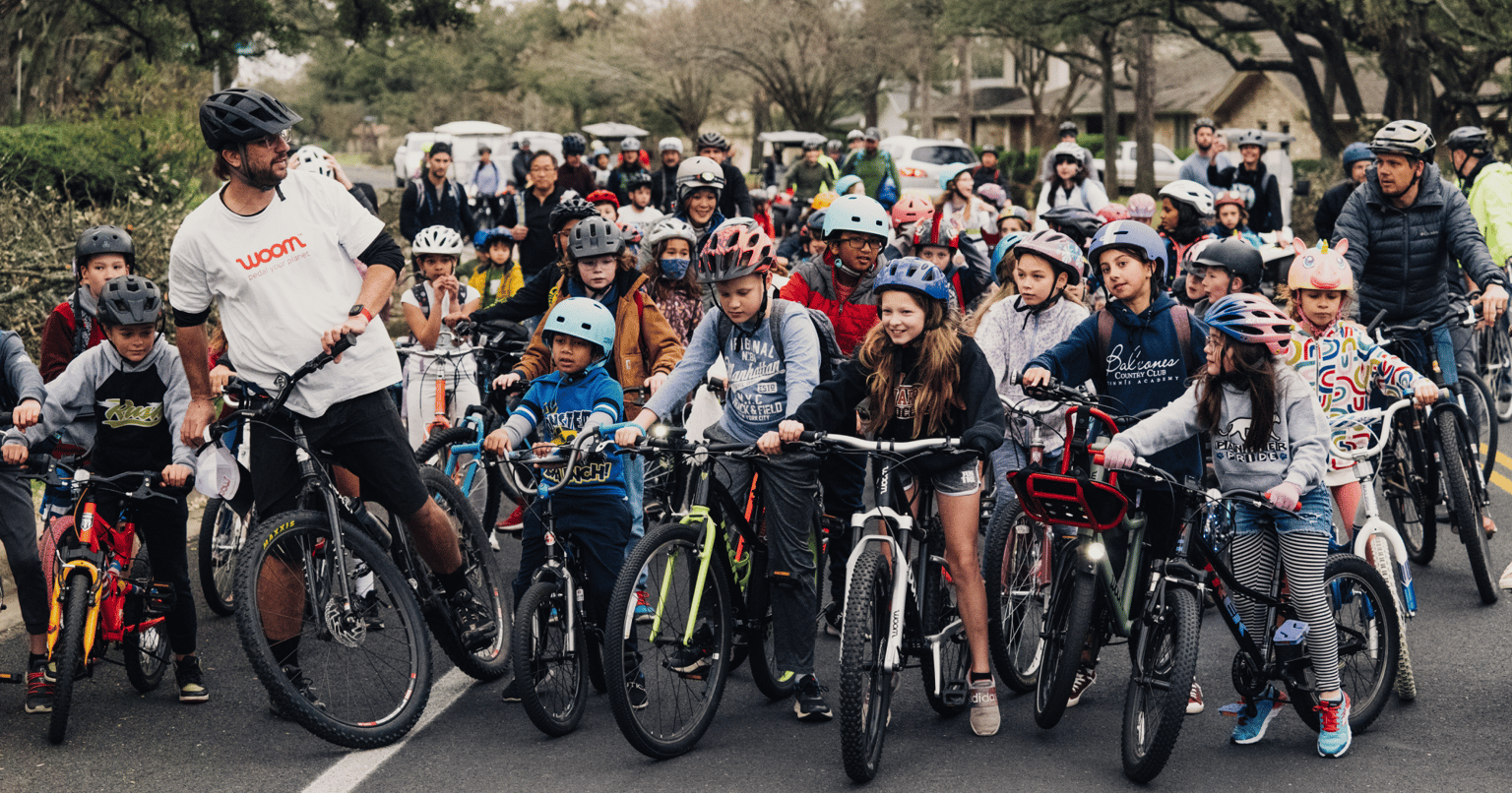
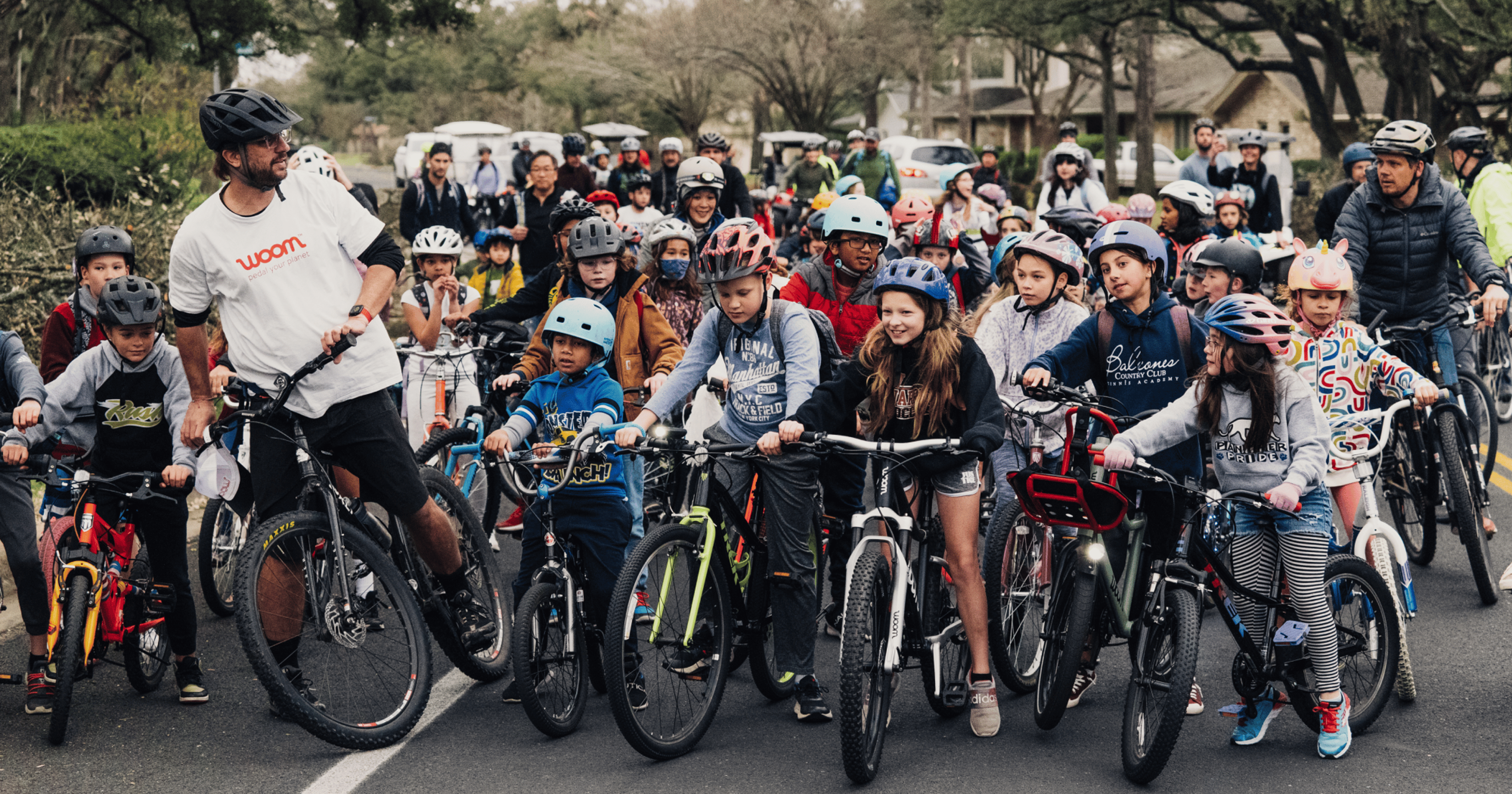
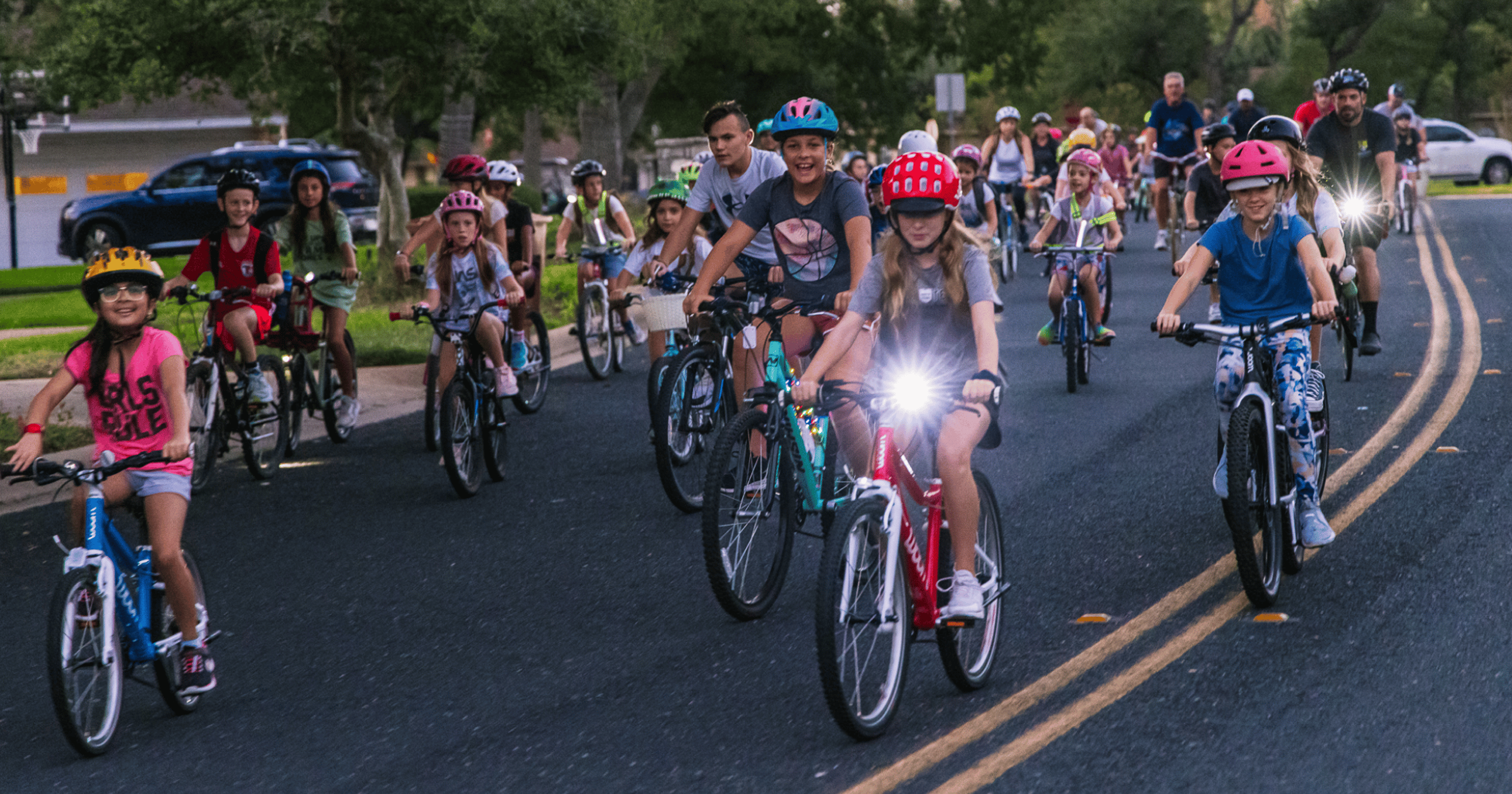
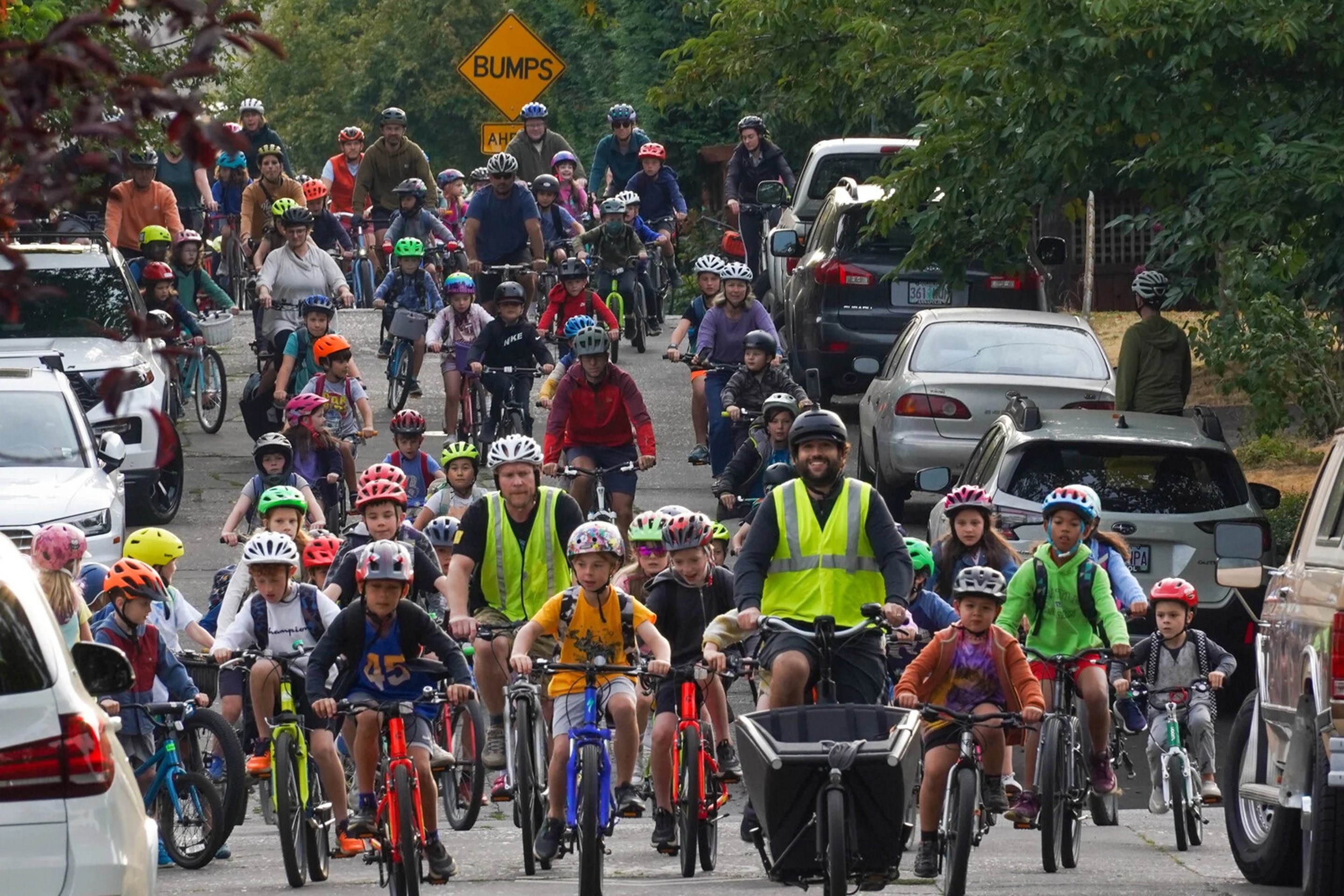
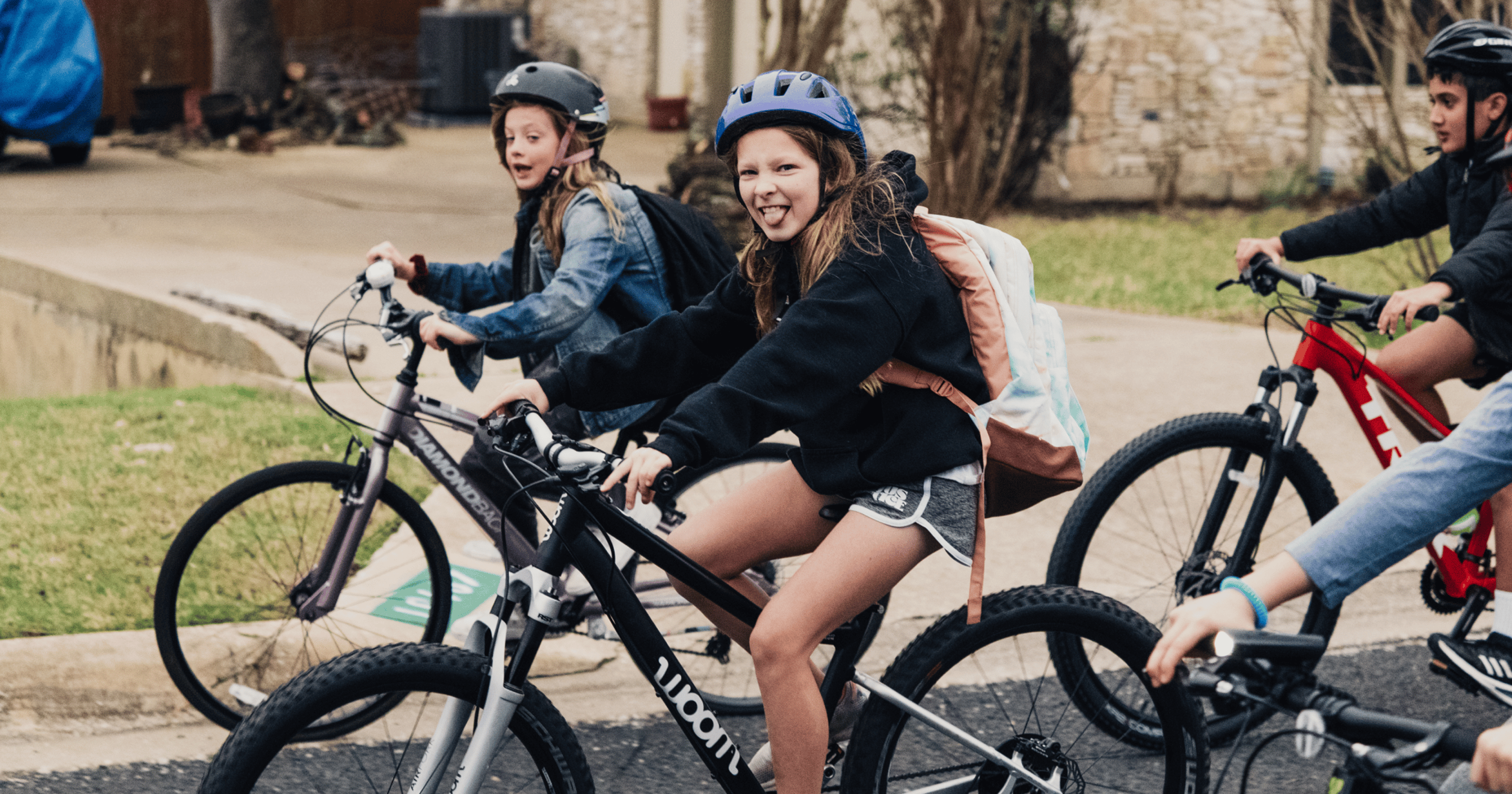
You hear a commotion before you can tell where it’s coming from. At first, it’s just the sound of a single bicycle bell… Seconds later, a growing whir of bicycle tires, children’s laughter, and a speaker playing “Can’t Stop the Feeling”. Then, turning the corner and coming into sight: a boisterous gaggle of kids flanked by a few adults, rolling down the street on bikes at 7:30 a.m. Is this some sort of fever dream? A flash mob? No, it’s a bike bus!
What is a Bike Bus?
Think of it as similar to a traditional school bus, minus the exterior shell. Instead, imagine a large group of students, parents, and helpers riding bikes together, heading to school on a set schedule along a predetermined route.
Virtually unheard of at the start of the decade, the bike bus movement is starting to turn heads and make waves because it’s bucking the current transportation trend: As it stands today in the US, more kids than ever – the vast majority – are driven to school in cars. Meanwhile, the share of students arriving at school via traditional school buses, on foot, or by bike has steadily dwindled since the 1960s.
While the first documented bike bus appeared in Belgium in 1998, it wasn’t until a Barcelona-based “bicibus” gained mass popularity in 2021 that the movement really took off globally. Something about seeing hundreds of kids take to the streets on bikes struck a chord with certain folks invested in kids’ wellness. One of those most inspired by the scene in Barcelona was a high school gym teacher, “Coach” Sam Balto.
Leading the Charge: Sam Balto
As a former gym teacher, Balto understands the importance of staying fit. And as a long-time advocate for active transportation, he’s adept at utilizing available resources to create more opportunities for kids to safely arrive at school on their own power.
In fact, before his involvement with the bike bus, he helped lead a “walking school bus” route. Later on, he first came into the national spotlight with a bit of eye-catching tactical urbanism. The tactic? He deployed cardboard Tom Brady cut-outs to turn heads and slow down traffic near his Boston-area school, proving highly effective. The goal was to create more opportunities for kids to arrive at school safely, whether on foot or by bike.
After he moved to Portland and got his new school’s weekly bike bus rolling, social media helped the movement go viral. Things gained momentum quickly from there, and Bike Bus World was founded in 2023. Now, organizing and facilitating bike buses across the US is Sam’s full-time job.
And while bike buses are often pitted against school buses as a point of comparison, Sam Balto, co-founder of Bike Bus World, is quick to call out the real enemy: “Buses are great. School car lines are our nemesis.” So while traditional school buses remain a great option, they’re not always available. With school bus routes often cut due to budget constraints, driver shortages, and low ridership, car commuting can feel like the only option for many parents. But if there’s one thing American parents can agree on, it’s that no one loves lengthy school drop-off lines.
In fact, many parents are eager for a change in the morning school commute – and desperately want to empower their children with more independence – but feel trapped in their car-dependent routine. Sometimes, all it takes to reverse the trend is for someone to lead the way. Sam Balto has seen firsthand how eager kids are for a different way to get to school. “You give kids an opportunity to be outside and be with their friends, no matter what the weather is, they want to do that. We just have to create opportunities.”
With Coach Sam Balto’s Tiktok reels and Instagram posts racking up millions of views and inspiring parents and teachers, many have taken action and followed suit. New bike buses are emerging in cities and suburbs across the US. One of them is right in woom USA’s own backyard in Austin, TX.
The Ripple Effect: Tim Koek
Just like a "desire path" – the kind of shortcut that organically emerges in the grass where people actually want to walk or ride – the bike bus movement is carving out its own niche and gaining momentum through sheer popular demand. When someone with passion and determination like Sam Balto takes the lead, the metaphorical path becomes wider and smoother for everyone else.
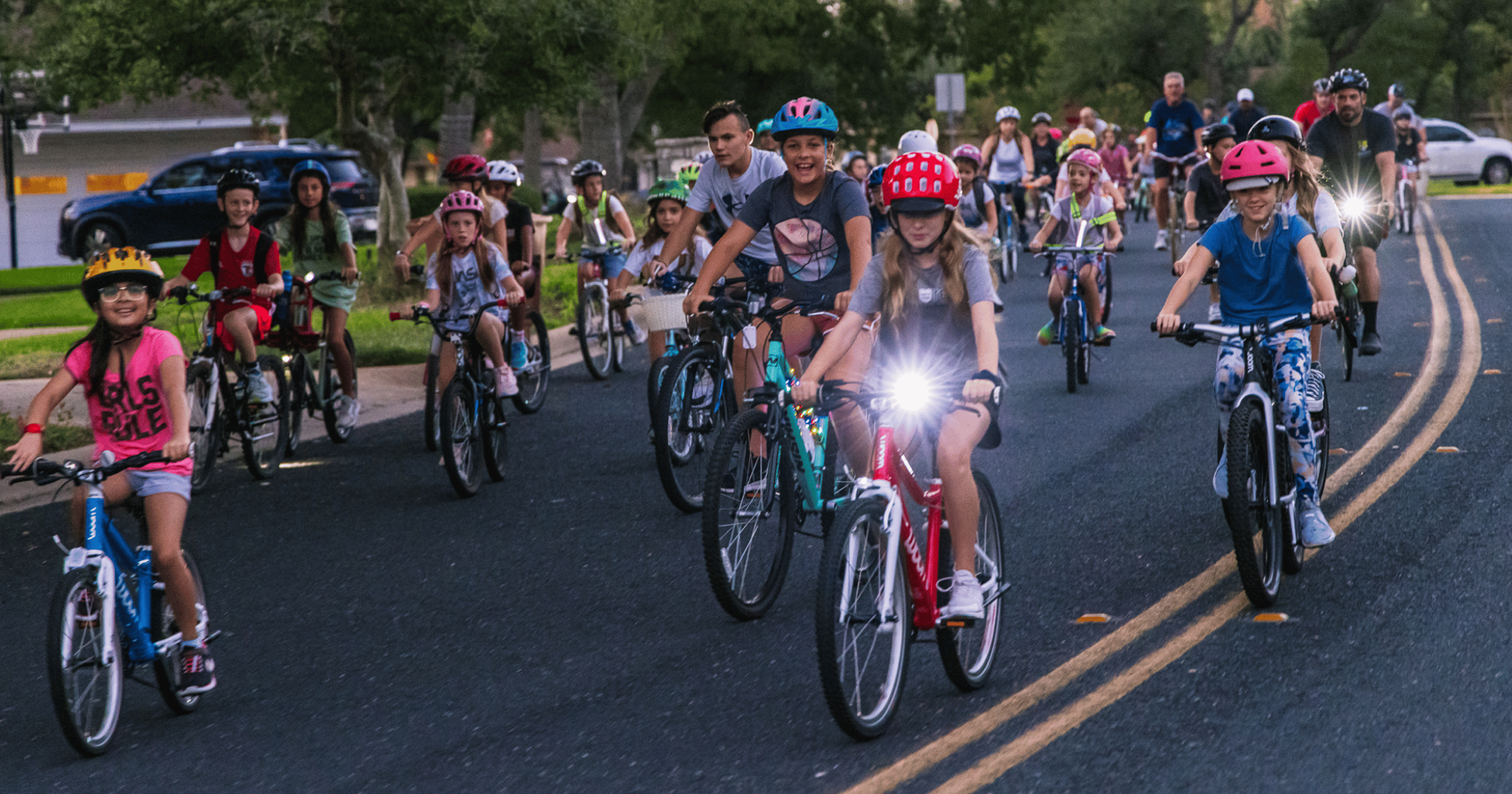
After seeing a Balto reel online and wanting to start a bike bus of his own, Tim Koek, parent of two elementary schoolers, decided to reach out to a few other parents at Cedar Creek Elementary in Austin. Little did he know, months later, he would be leading dozens of elementary students on a meandering route to school on a weekly basis.
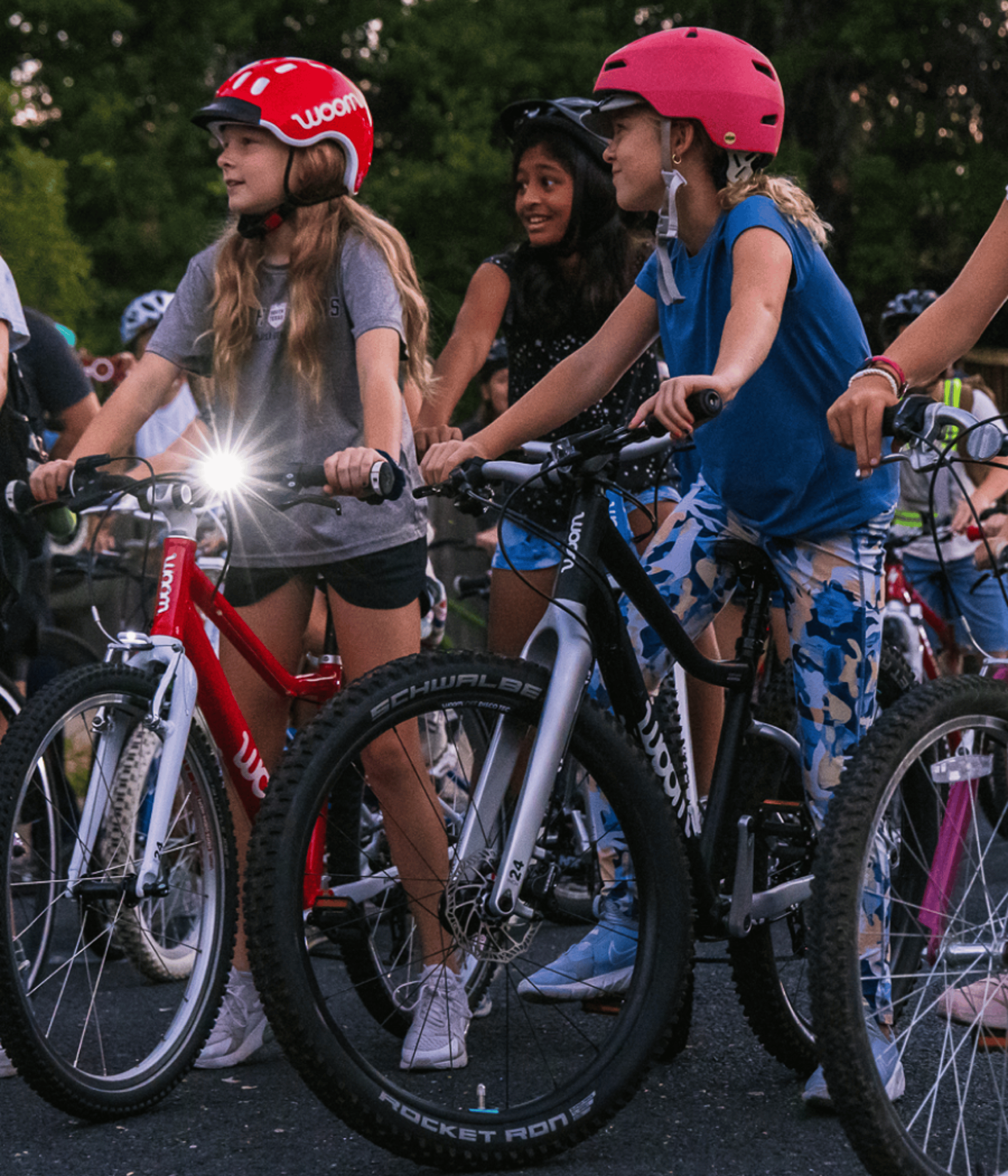
Once the community began to witness the bike bus in action, it snowballed. What started as a text to a few parents evolved into a weekly Friday morning tradition with 30 to 60 riders. Their route even picked up an unexpected ally: “We’re unique in that we now have a police escort for every ride”, Tim explained, alluding to friendly Officer Mike. Once he became aware, Officer Mike Cowden, an avid cyclist himself who lived nearby, volunteered to assist as a police “caboose” with the weekly Cedar Creek bike bus after watching it grow over the weeks. So it goes, with the infectious positive momentum seen in the bike bus movement. As they say, if you build it, they will come.
The city of Austin has even taken note. Not only was the Cedar Creek bike bus recently featured in a KVUE news story, but plans are also underway to formally expand the movement. Discussing the future of the bike bus movement locally, Tim mentioned, “The city of Austin is looking to hire bike bus leaders, similar to crossing guards, to have a formal role to help schools. It’s great that the city is doing something like that, and they believe in the program.”
How Bike Buses Benefit Everyone
Whether it’s a peloton of lycra-clad adults or a bunch of kids with backpacks en route to school, the appeal of a well-organized group ride is clear: there’s power in numbers. This adage holds especially true when it comes to cycling with a group of kids. Kids are demonstrably safer when riding together in a large, organized cohort. This also means peace of mind to parents.
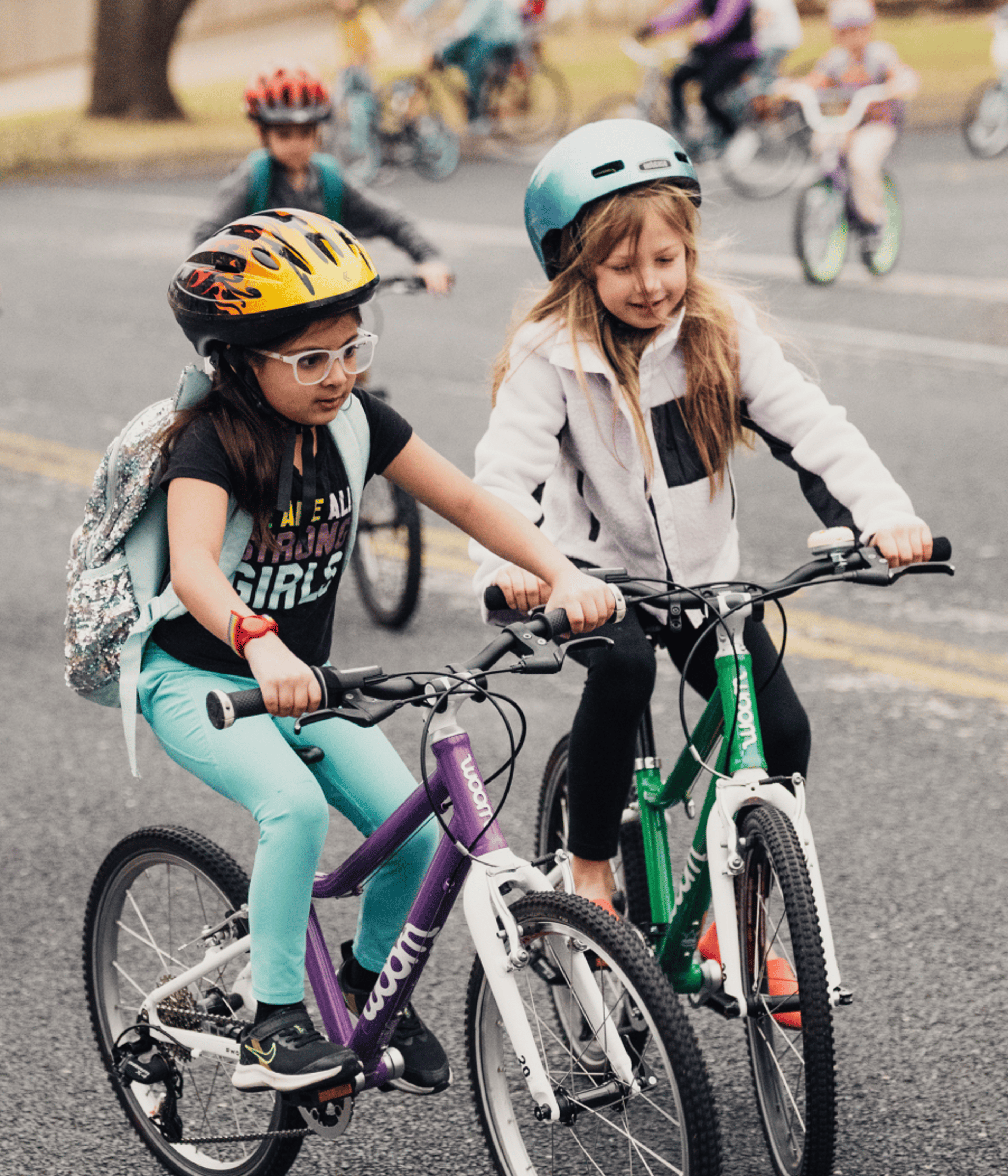
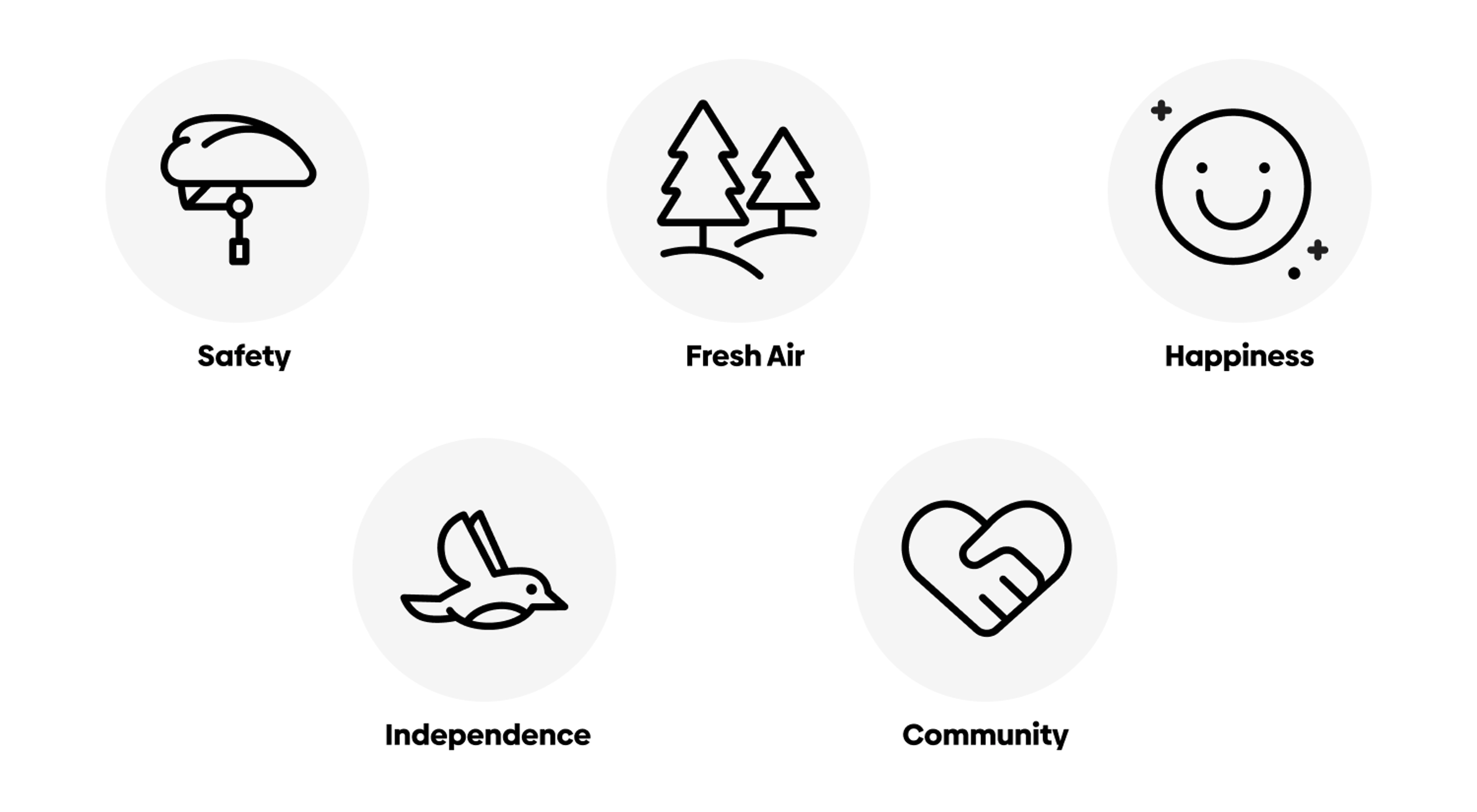
But bicycle buses are about so much more than just getting to school by bike safely. It’s about switching up the routine, getting outside, seeing a different view of the neighborhood, and getting a boost of endorphins before the first bell. It’s about starting off the school day with a burst of joy, music, and camaraderie. It’s about getting a taste of freedom and being less reliant on parents and cars.
And it’s not just kids who are fired up about bike buses. Parents who have gotten involved rave about the freedom, community, and conversations. Neighborhood residents along the route, noticing the predictable, consistent weekly rides, are seen waving, smiling, and recording videos. Teachers have joined in and have found new ways to connect with their students while riding alongside them. Even passing car drivers – perhaps mildly inconvenienced by a group of student cyclists – seem to be open-minded about the prospects of a bike bus.
After all, heading to school is a nearly universal and thereby relatable experience. So, while many drivers in the US aren’t cyclists themselves, most interactions between car traffic and bike buses tend to be neutral or positive. It’s hard to get upset when seeing a group of kids with backpacks smiling and pedaling their way to school. Hence, bike buses put cycling in a positive spotlight within communities – and this creates ripples that extend beyond.
“The amount of kids that are out roaming again, since starting our bike bus, has gone up exponentially, in our community. It really is this thing that resows the social fabric of society. Parents are now having more trust in society, but also in their kids. The kids now have a better sense of their neighborhoods, and drivers are more aware now that there are kids riding bikes.” - Sam Balto
How Bike Buses Change Communities
After talking to both Sam and Tim, a pattern emerged. In communities where a bike bus emerged and became active and consistent, there was a noticeable uptick in kids asking for birthday bikes, inspired by the bike bus. Other younger kids told their parents they wanted to learn how to ride, specifically so they could participate in the bike bus. Some kids loved the bike bus so much that they began riding to school daily.
While most bike buses operate on a weekly basis, the benefits extend far beyond a one-day-per-week reduction in school drop-off congestion. Not only does the bike bus movement challenge the status quo of car dependency in a very visible way, but its impact is also felt on the other days of the week. Sometimes the bike bus acts as the approachable “gateway” to more bike commuting. Tim Koek noted, “If parents are comfortable enough with them riding in the bike bus, then they’re probably comfortable enough with them riding [to school] on other days of the week”.
Analyzing the impact of his own bike bus at Alameda Elementary School in Portland, Balto explained that the movement is far more than just an alternative form of transportation to school. “The amount of kids that are out roaming again, since starting our bike bus, has gone up exponentially, in our community. It really is this thing that resows the social fabric of society. Parents are now having more trust in society, but also in their kids. The kids now have a better sense of their neighborhoods, and drivers are more aware now that there are kids riding bikes.”
Why They’re What Our Kids Need Right Now
In modern-day American society, kids are given less time and space to explore compared to generations past. Indeed, the idea of kids “free ranging” is almost a forgotten concept, and the radius in which most parents allow their children to roam has shrunk dramatically over the last 100 years. While there may be plenty of good reasons for this shift, it has resulted in kids having fewer opportunities for socializing and left parents wishing they had more safe outlets to let their kids be independent. The net result of this societal trend toward “helicopter parenting”? Far less outdoor time, often replaced by more screen time, and less independent kids who are reliant on their parents to drive them anywhere.
There is perhaps no better illustration of this point than in school drop-off car lines. Sets of frustrated parents and bored kids wrap around the block, each in their own vehicle, isolated from their peers, waiting to move a few feet forward every few moments. Show up early, or try to be the last to arrive “on time” – there’s no getting out of a long wait with school car drop-off lines. “Nowadays, everything has morphed into car lines”, Tim Koek said, reflecting on school transportation logistics. “But there’s this hankering for how things were.”
The bike bus also effectively serves as a "joyful equalizer". It’s a space where the bar for success is low, making it accessible for kids who might not excel in traditional sports. Both Sam Balto and Tim Koek attested: the morning of the bike bus is the easiest day to get their kids out of bed because they are genuinely stoked to see their friends, move their bodies, and switch up the routine.
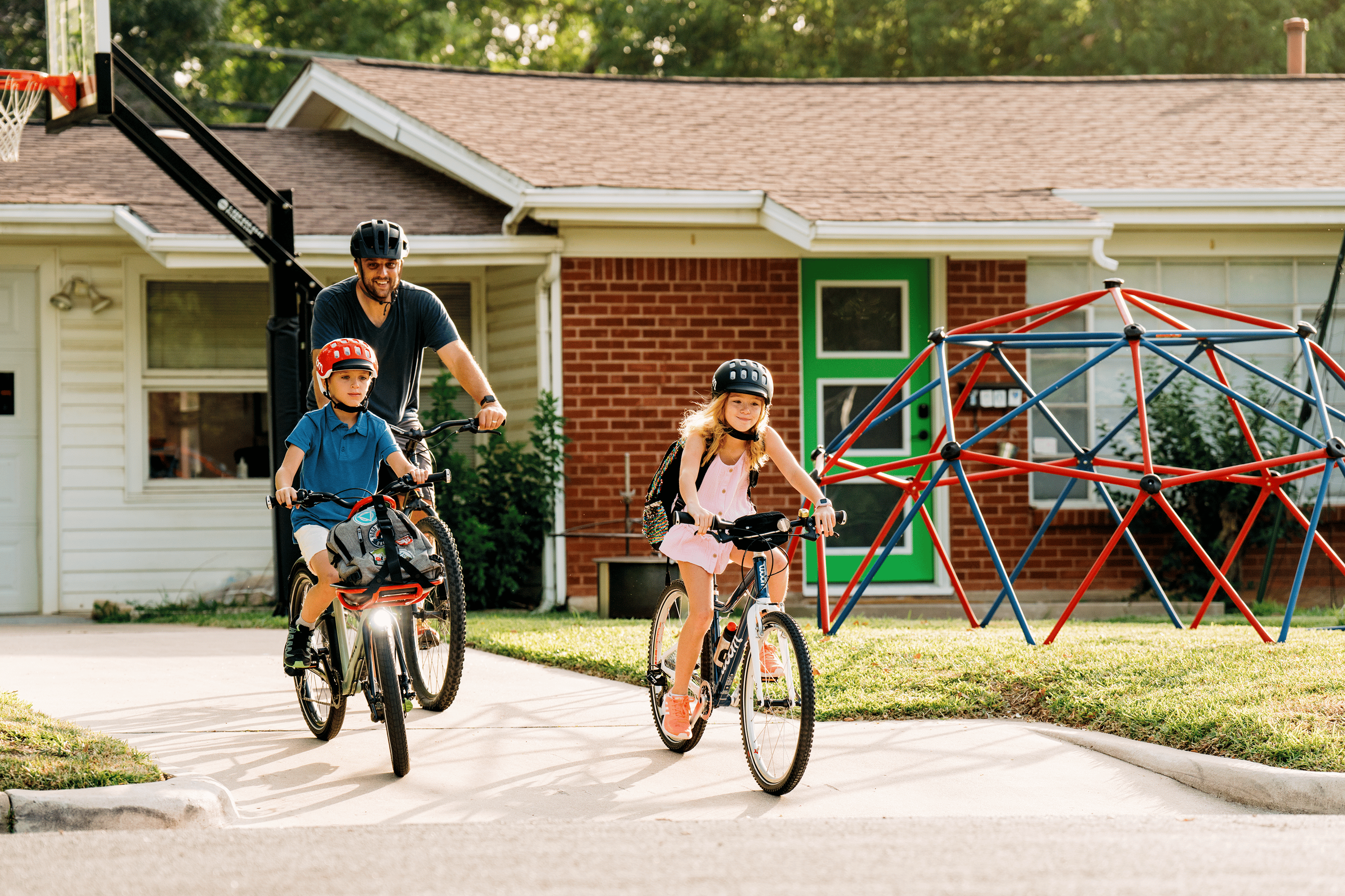
Beyond it simply being fun, the bike bus also serves as a tool to scaffold independence. “The bike is your kid’s gateway to freedom,” said Tim, fondly doting on his own kids’ burgeoning autonomy. And in a world where the roaming radius of kids is eclipsing, parents and kids alike are hungry for these sorts of opportunities.
Overcoming Challenges with Resilience
Of course, it isn't always easy. There’s wind, rain, sleet, snow, and hills to contend with. And, maybe the most difficult obstacle, there’s often infrastructure that prioritizes motorized traffic over bikes. But none of these impediments are insurmountable. “Humans and communities are resilient, and we’re problem solvers. There might be some gaps on the route, but if you came together and problem-solved a bit, maybe with tactical urbanism, maybe there are solutions for those gaps,” said Balto.
Reminiscing on a memorable challenge, Balto shared, “I did a bike bus in Nevada City, CA. Those hills were massive. And sure, kids didn’t ride up it the first time, but each week, they went up more and more without stopping, until they made it all the way up, and they’ll never stop again on that hill. They just decided we’re going to go up these hills, and when we get to the top, we’ll wait for everyone and just build that into the time. But we’re not going to NOT do a bike bus because of a hill.”
Another potential challenge is logistics. After all, it’s hard to reply to texts or calls when you’re already riding a bike, plus leading a group of dozens of students. Both Sam and Tim have created WhatsApp groups for their bike bus to coordinate routes, complete with pick-up time windows, maps, and tips for new parents.
Consistency is key. You have to keep on showing up, even on the tough days. Both Sam and Tim echoed the same sentiments on consistency. Especially on those rainy mornings, it’s essential to maintain momentum. As the leader of the bike bus, Tim commented, “That’s really the challenge, getting the community to always be there. I never know who’s going to turn up, but we have to turn up”.
Why woom Cares
At woom, our mission is simple: get more kids on bikes. Furthermore, we believe bikes are more than toys; they are vehicles for confidence, health, and community. So when we witness someone aligned with our mission and embodying our beliefs, we take notice. After seeing a few of Coach Sam Balto’s inspiring Instagram videos, we knew we had to get involved. Since then, we have been proud to support and partner with both Coach Balto and Tim Koek on their bike bus efforts – from providing bikes for giveaways to supporting events in cities across the US.
When you provide a child with a high-quality, lightweight bike – one they actually love to ride – their path to confidence and success becomes that much clearer. And while the right bike matters, you don’t need to spend a ton or buy new. “A kid is going to learn quicker and feel more confident riding a high-quality lightweight bike, but the best bike is the bike kids have access to,” said Sam Balto. “There’s no shame in getting a used bike.”
We can’t wait to see the movement continue to grow, helping more parents reclaim the morning commute, replace the idling in the car line with laughter, and give kids the freedom they deserve. Getting kids outside, active, and connected to their neighbors?
Ding! Ding! Ding! That is the whole point.
Want to Start Your Own Bike Bus?
As we’ve seen with Sam Balto in Portland and Tim Koek in Austin, all it takes is one person to blaze the path. And while starting a bike bus might feel like a big lift, you don't have to do it alone. Think of yourself as the creator of a new "desire path" in your neighborhood – once you start the movement, the community will naturally follow.
Whether you are looking to escape the frustration of the school car line, reclaim your morning for movement, build a community of cyclists, or give your kids a taste of independence, there is likely a community of parents ready to ride with you. From finding your "why" and building your team of parents to mapping out a safe route and recruiting an "Officer Mike" of your own, we have the resources to help you get rolling.