The Bike Was Ready Before He Was
by Charlie LaNoue
He loved his balance bike so much he refused to pedal. Then three moments changed everything. One dad's honest story of teaching a kid to ride a bike.
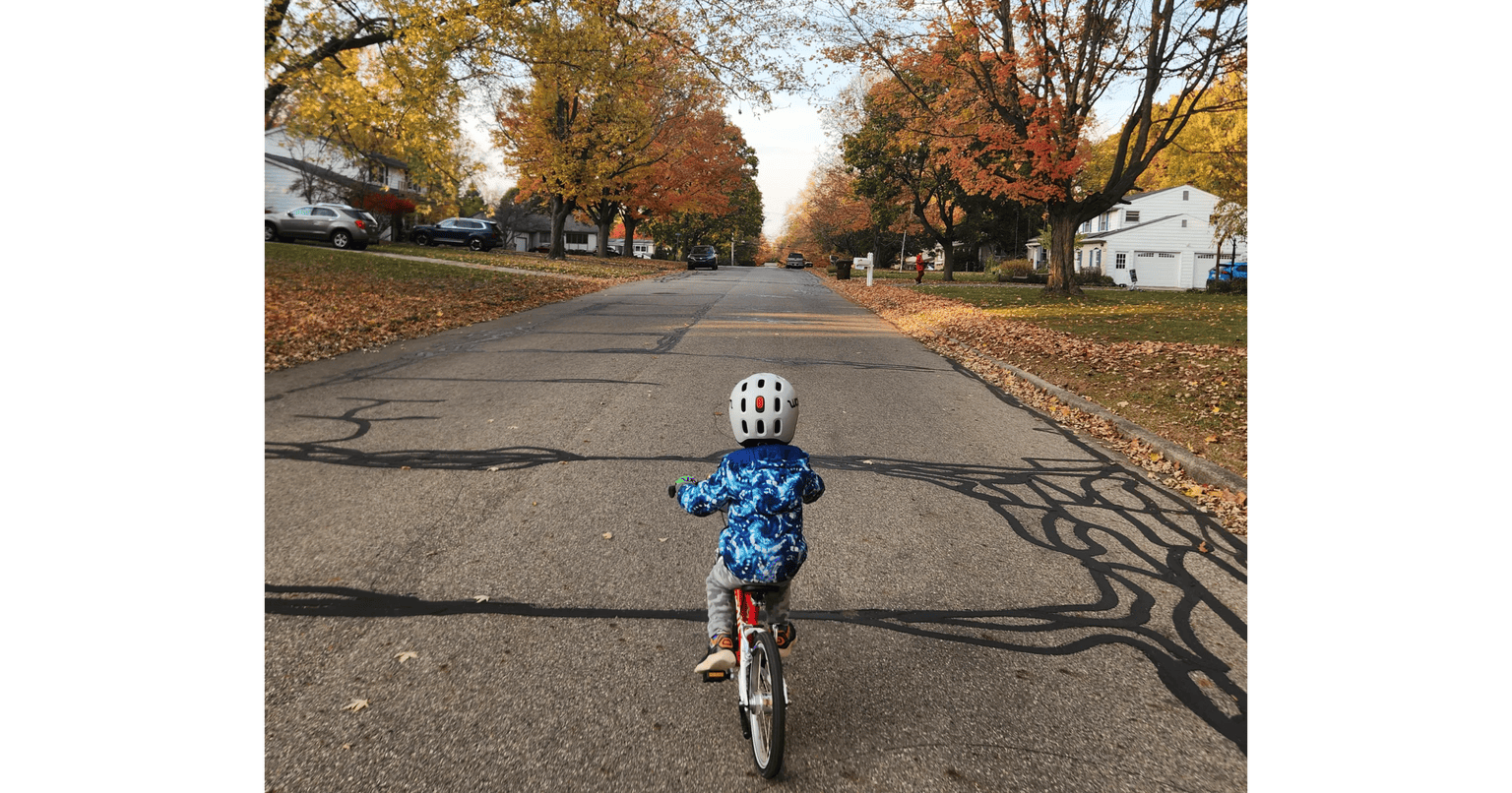
Watching my four-year-old son Jack zipping around boldly, somehow already attempting tricks (!?) on his GO 3 AUTOMAGIC, it feels hard to believe he only learned to pedal last summer.
The funny thing about progress, especially when kids learn new skills, is that it’s rarely linear. It takes baby steps: exposure, repetition, then scaffolding. Sometimes it feels like they’re just spinning their wheels. Then one day, boom – a massive leap, all at once.
But much like Jack zooming down the trail, I’m getting ahead of myself. How did my son go from hesitantly clinging to his balance bike to flying down the street pedaling proudly on his own? Let’s backpedal a year.
Learning to Ride
As any parent knows, just because a kid can do something doesn’t mean they’ll actually want to.
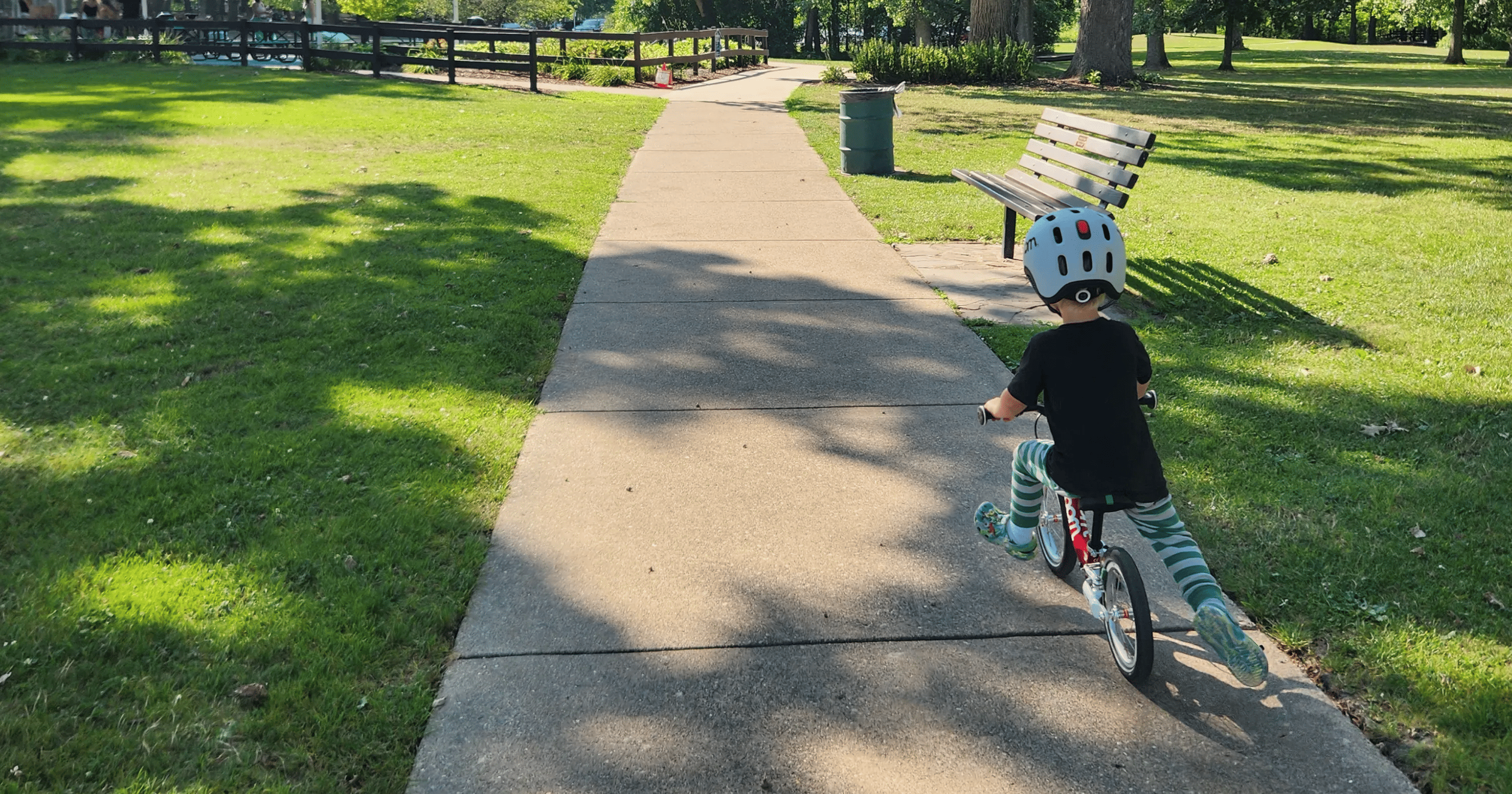
The truth is, the bike was ready before he was. We already knew the GO 2 was a fantastic first pedal bike, but that doesn't automatically cure a three-year-old’s hesitation to try something intimidating. In Jack’s case, he was so comfortable coasting around on his GO 1 balance bike that he didn’t want to give it up in favor of the unknown.
As I wrote about during our trip to Mackinac Island last year, he was pretty much convinced at this stage that he’d ride the balance bike forever. That’s all fine and well, but being on the taller side compared to other kids his age, he was soon approaching the end of his height range (~40”) on the balance bike.
I’ll admit, I panicked a little. I’m sure plenty of parents struggle with their kids’ milestones like potty training or learning the ABCs, but here I was – literally writing blogs on how to teach kids to ride – and my own son wasn’t taking to it. Talk about imposter syndrome.
Creating the Right Conditions
He never did want to part ways with that beloved balance bike.
In fact, he kept riding the balance bike until the seatpost height was fully maxed out (pro tip: look out for the minimum insertion line!). And then he kept on riding it some more, until his legs were dangling and he was clearly too tall for it.
Meanwhile, I just kept plugging away, making sure everything was in place for the transition to his next set of wheels. Planting little seeds and waiting…
- I made sure to leave the pedals uninstalled at first on the GO 2, which helps him get acclimated to the new frame size before having to grapple with learning to pedal.
- Then, I swapped out the legally-required coaster hub that the GO 2 comes with in favor of the superior freewheel kit.
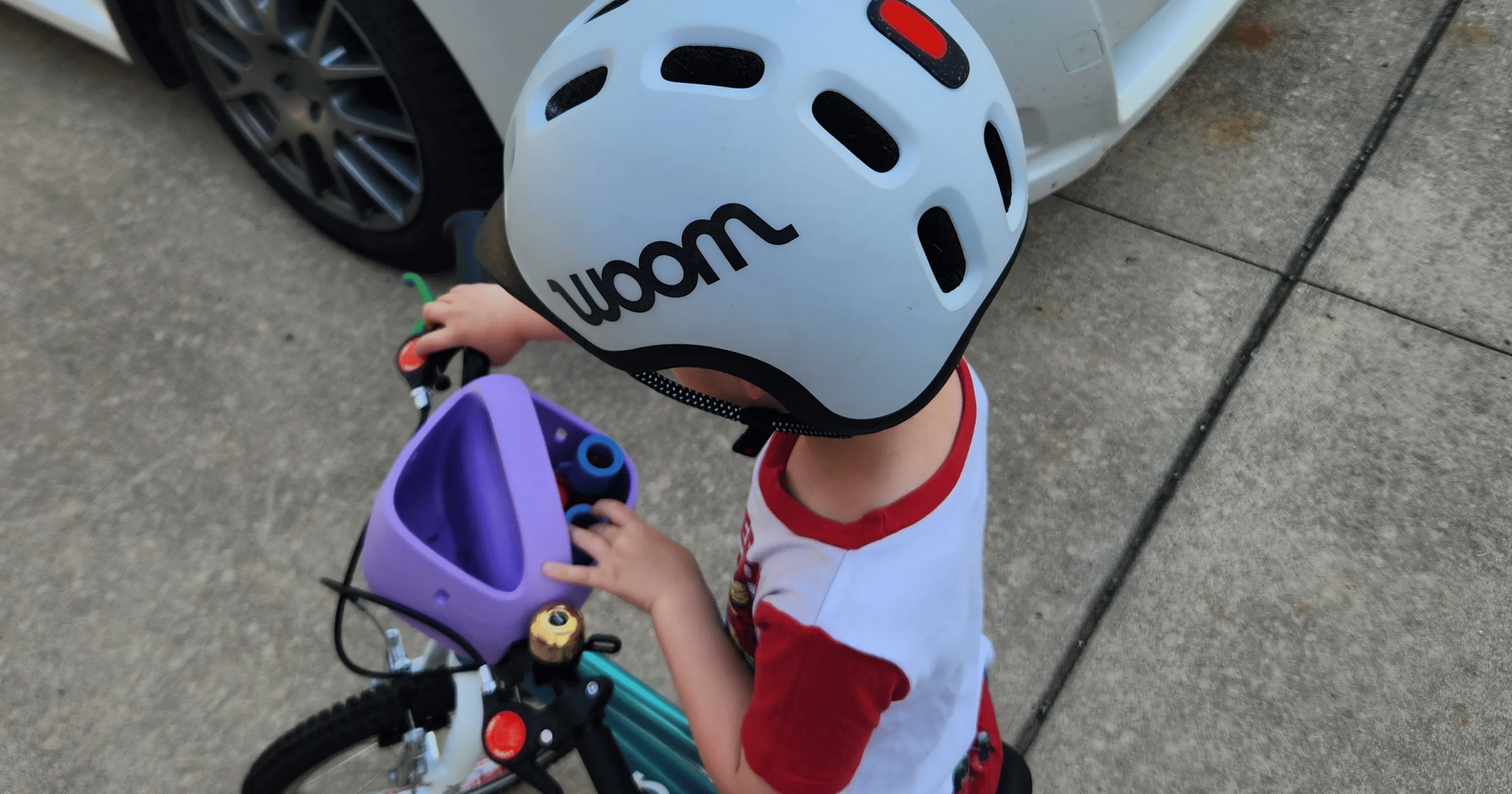
- I already had a POP basket waiting to go – which easily fits on the GO 2, but not the GO 1 – so this was another nudge toward him trying the new bike. He loved popping that on and off his new bike before he was riding it.
- Seemingly a small thing, but after I installed a bell on the GO 2, that really got Jack’s attention. He gravitated toward the new bike in the garage and started dinging the bell whenever he went by.
First Pedal Attempts
Once he gradually warmed up to the idea of this new bigger bike, we took it out for some coasting, just like with a balance bike, Fred Flintstone style. He definitely did not like these weird crank arms attached to the bike. They were slightly in his way, plus he had no pedals to test out – meaning, no instant gratification. After only a few times hoofing it back and forth down the driveway, he insisted we try out the pedals. “Like, isn’t that the whole point of this new bike business?” I could feel him thinking. But once I twisted them on and he gave it a spin, he struggled, felt awkward, and then instantly got frustrated.
Back to no pedals for a bit. A few weeks of that, maybe a month. At this point, it was summer, and he was over 3 years old, about 41” tall, and could scoot around on his balance bike like a pro. I knew he was ready, but he didn’t know it yet.
Remember when I said progress is rarely linear? Well, when I think back to last summer, there were three key moments where things started to click.
Breakthrough #1 at Home: Mindset Shift
Jack's mindset: Maybe I'll try this.
Remembering something I’d learned from reading How to Talk So Little Kids Will Listen, I decided to deploy a surprisingly effective parenting hack and get totally silly with him, proposing a series of ridiculous solutions to our sizing dilemma. It went a bit like this:
“So we have this problem where you keep growing, but we’ve already raised up your seat as far as we can. But your feet are starting to drag and you can’t take full strides anymore since you’re getting too tall. Do you think we can just feed the balance bike some mac & cheese to help it grow a little more to keep up with you?”
“Noooo that can’t work! It doesn’t have a mouth.”
“Well how about we just shrink you back down a little bit, then? Maybe I'll try gently pushing down on your head for a few hours and see if that works.”
“Nooo Dad! Don’t do that!”
“Well how else can we get you on a bike your size? Do you think if we put your balance bike in the sun and water it every day it’ll grow just a little bit?”
[toddler eyeroll]
“Oh I know… what if we just tried out your bigger bike that’s been chilling in the garage for months?”
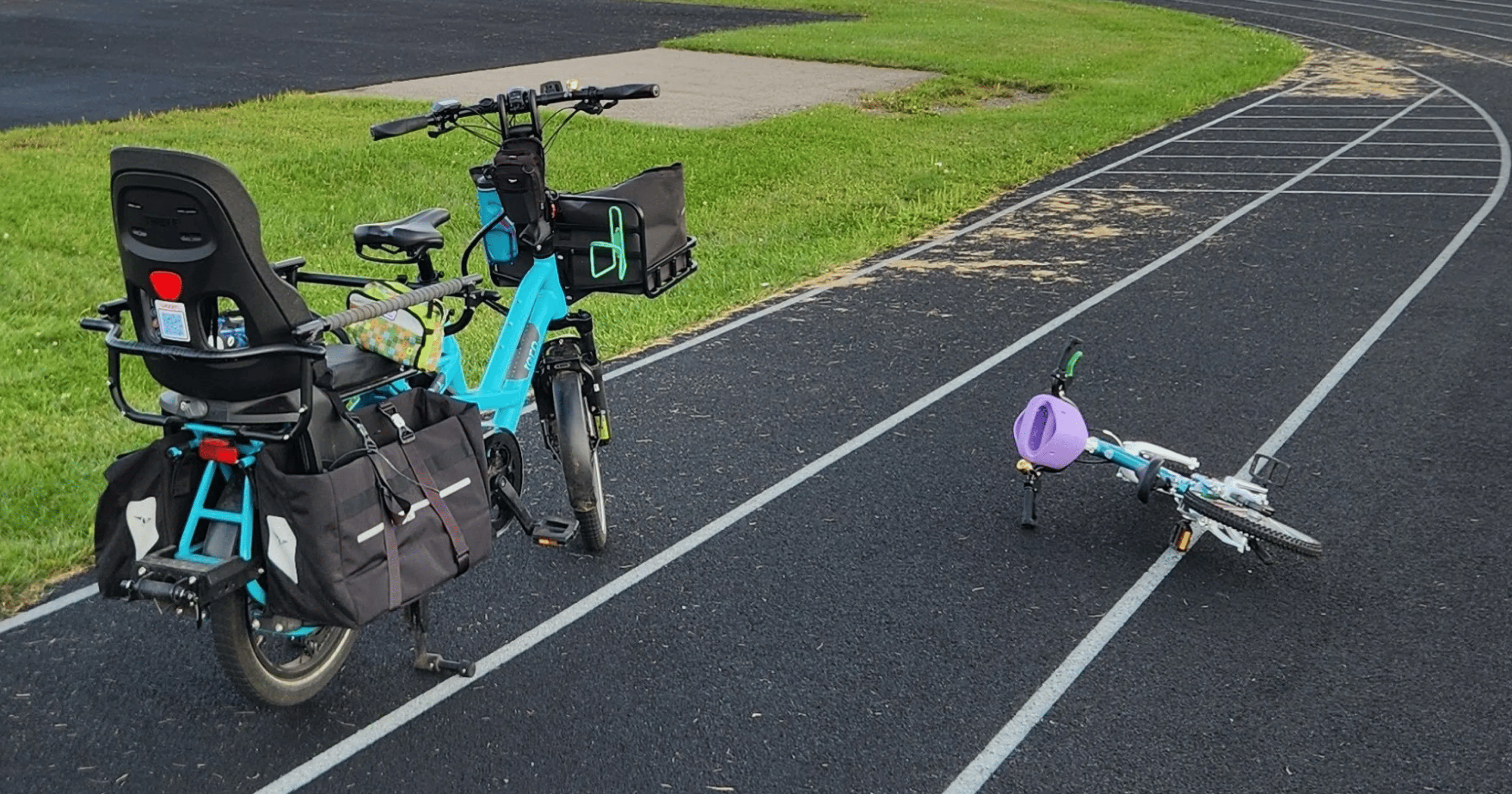
After a few rounds of this absurdity, he reasoned that trying out the new bike might just be the move. He was down to give it another try! This time, I wasn’t going to just repeat our last pedal attempt. I wanted to take him somewhere special where he’d feel extra safe. I told him I knew about a magical place where the road isn’t hard, and it won’t hurt if you fall. He was intrigued.
Breakthrough #2 at the Track: A Safe Space to Learn
Jack's mindset: Oh, I can actually do this.
As luck would have it, there was a high school athletic facility within a short walk of our house. During the summer months, it was usually completely empty. The track was pretty special. With wide open space, no traffic, no hills, no sharp turns or navigation to think about, no sidewalk bumps, and no rough pavement (the track material being spongy and forgiving), Jack’s anxiety quickly melted away. This idyllic setting was no doubt key – but he still needed just a little boost to jumpstart his breakthrough.
With my hand gently pushing his saddle (not his handlebars!), I steadied his back (giving him a sense of security which set him at ease), and then watched as he mastered his first few successful pedal strokes! I jogged alongside him on the track and saw him come to a stop safely with his feet. That right there was the turning point. Not only did he pedal, but he brought it to a stop without crashing.
He was grinning wildly – a complete absence of fear or anxiety – just totally stoked. Right then and there we celebrated like we’d won the lottery. To my elation, he wanted to try it out again and again. He was hooked, and most importantly, he overcame his fear. The mental barrier was shattered.
Breakthrough #3 at the Campground: FOMO-tivation
Jack's mindset: Holy moley, I want to do this.
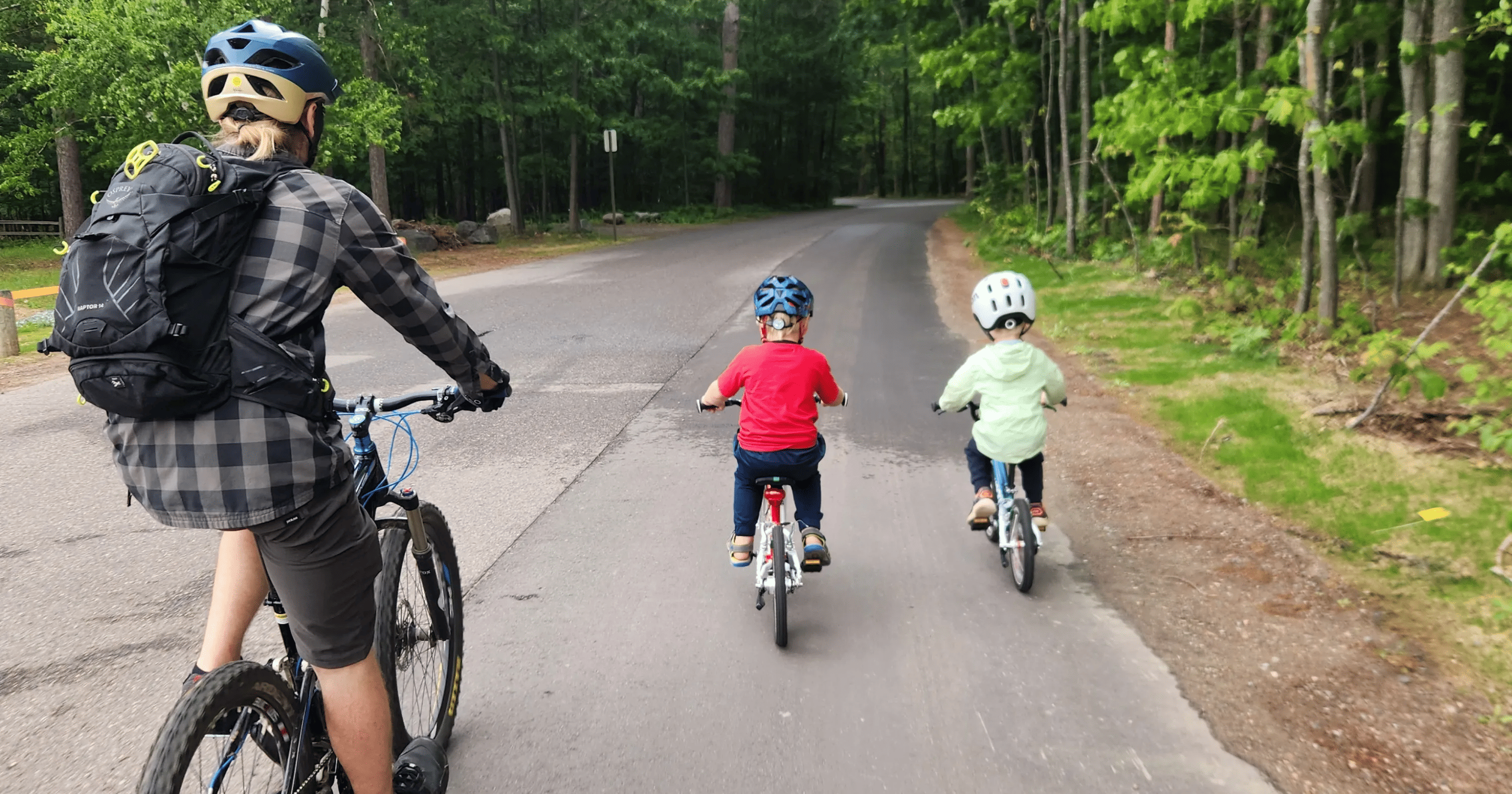
Location, location, location, they say. Not only does the physical setting play a huge role, but also the social setting. Just a few days after his turning point at the high school track, we had a family camping trip planned to Pokagon State Park, IN. This time, we decided to leave the balance bike behind and take the GO 2. Not only was Jack still feeling the surge of confidence from his first success pedaling, but he now found himself in a kids’ cycling paradise, with an abundance of inviting, low-traffic campground roads.
Nothing motivated Jack quite like seeing a pack of other kids tearing around on two wheels, having the time of their lives. The FOMO factor was palpable. He couldn’t wait to get out there and show off. In fact, any residual fear of falling was entirely eclipsed by his desire to join the pack. By the end of the trip, he was cruising around like it was nothing – like he’d always known how to ride.
Building Momentum
From there it snowballed…
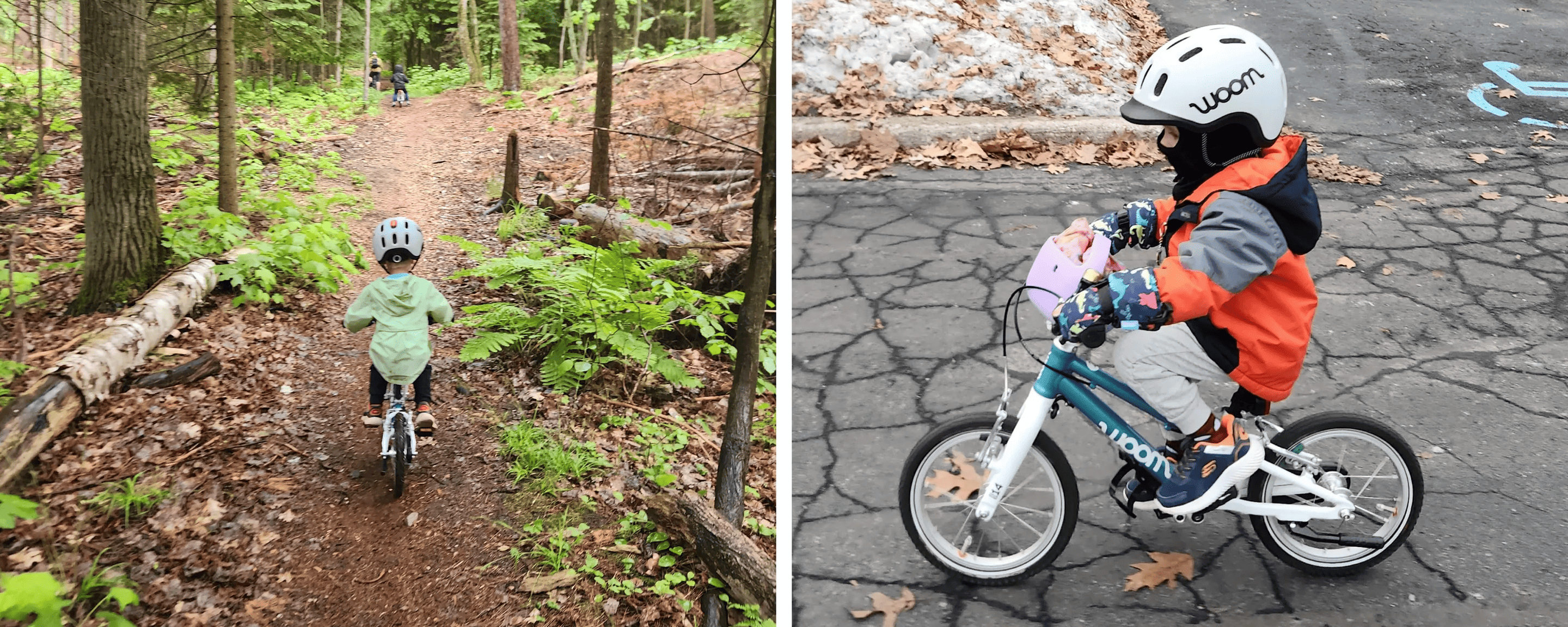
Daily practice in parking lots. Rides to get ice cream at Quality Dairy. Neighborhood cruises to collect flowers and leaves in his basket. Practicing going down hills. Learning how to use his kickstand. Learning the left from right brake, thanks to the handy color coding. Riding about halfway to daycare (then hopping on my cargo bike when he got tired). Eventually, he was riding all the way to daycare 1.5 miles away – occasionally stopping to scratch his nose, stare at a rabbit or squirrel, or take a break at a hill. And definitely relishing being the only kid at daycare who rode a bike there.
We kept the momentum going as much as possible during the Michigan winter, going on shorter rides when conditions allowed and riding to daycare when the roads were clear of ice and snow. Sometimes our winter rides were ultra short and took longer to bundle up than to pedal. Still, these were symbolic victories. Triumphs over the elements. It felt important to keep building on the successes of late summer and fall.
Learning to Fly
By the time the next summer rolled around, Jack – now a year older – was about as confident as any 4-year-old I’ve ever seen on two wheels. I would catch him doing “tricks” like putting his feet over the top tube or even over the handlebars for a few seconds while he balanced and coasted, before putting them back down and pedaling right at the last possible moment before he would’ve tipped over. Perhaps a bit too much swagger, even! But you have to give kids room to test things out and fall, within reason. After all, falling is not failing.
I’ll never forget the last time he rode his GO 2.
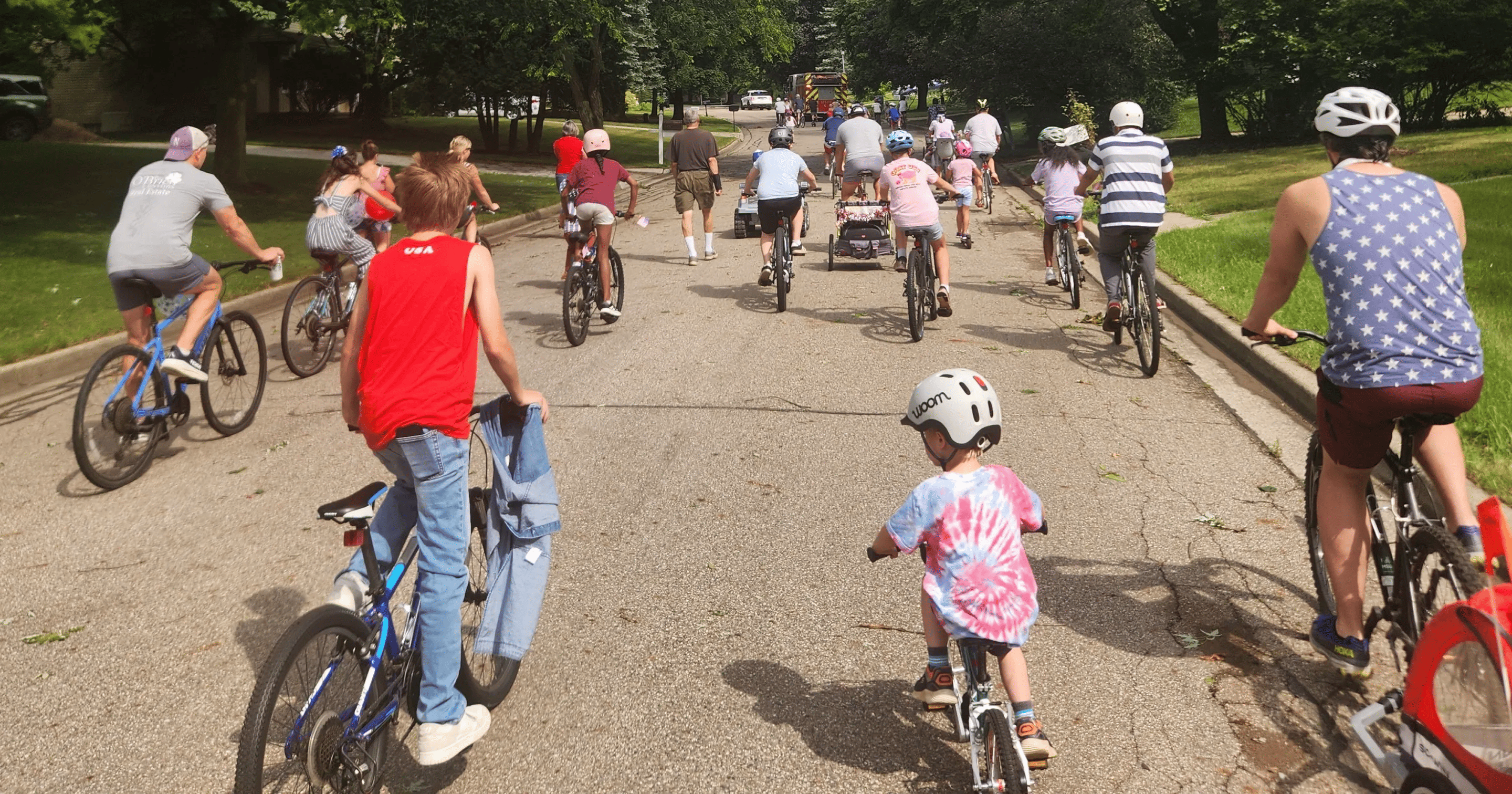
Our neighborhood was having a 4th of July Bike Parade. He rode to the starting point a few miles away, decorated his bike with stickers, garlands, and flags, and rode a few more miles with a nice mix of adults and other kids. His first “group ride”. He was clearly the youngest rider in the parade, and parents noticed. Having nearly outgrown the GO 2 at this point, we both knew his new bike would be arriving soon, and this was likely his last hurrah on this bike.
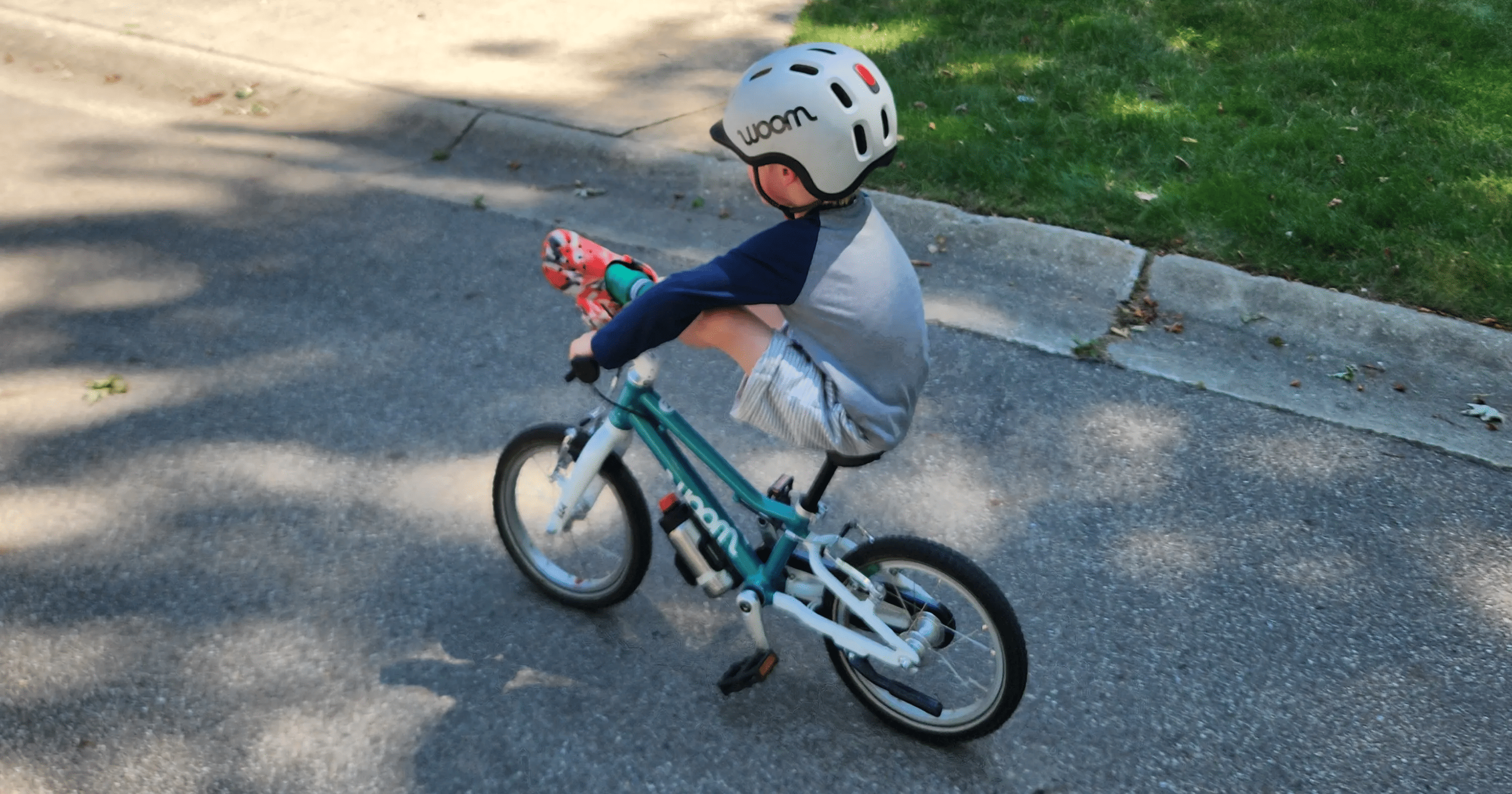
I couldn’t help but reflect on how far Jack had come since he first climbed onto the GO 2. In the course of a year and change, he transformed from cautious and hesitant to boldly self-assured. From being scared to try to pedal, to doing tricks against his parents’ wishes while riding himself to school. I found myself feeling bittersweet nostalgia about the end of an era.
But a new one was beginning. And this time for Jack, when it came to upgrading his bike, he wasn’t dragging his feet; he was ready. Scrap that… not just ready – eagerly awaiting the upgrade.
Finding His Next Gear
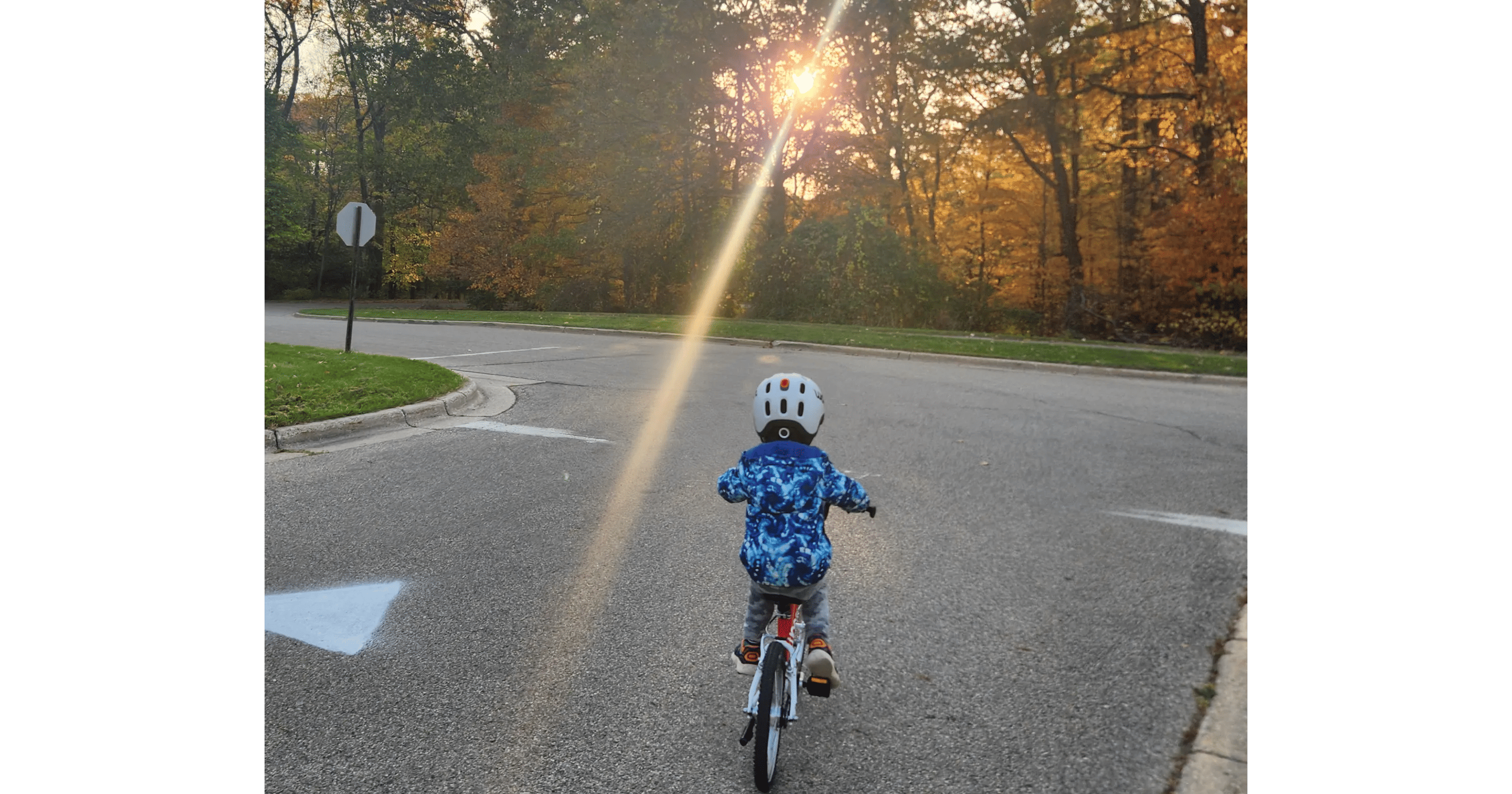
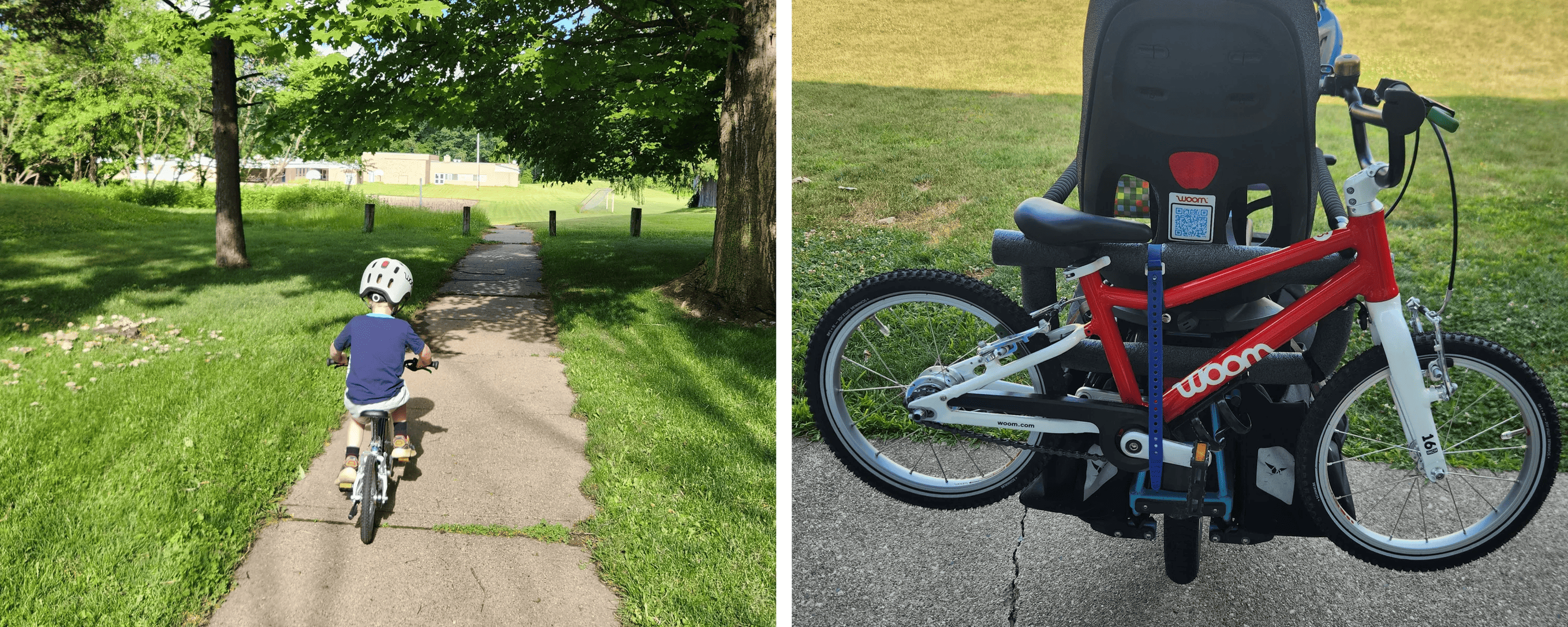
Right off the bat, Jack and I both loved the GO 3 AUTOMAGIC, his new 16” bike. For him, it was because it was his new favorite color, red, which he got to pick himself. For me, it was the two-speed internal gear hub. Letting him have the benefits of two different gears – but without having to fuss with a gear shifter – was something I was really looking forward to.
On our first ride to daycare on the new bike, we both felt an immediate difference compared to his last bike. Not only was Jack able to easily ride faster and keep up with me (we averaged about 9 mph), but that hill on our daily daycare route – the one he always either stopped at or struggled to get up – was now suddenly quite conquerable. When you've watched your kid struggle up the same hill day after day, seeing him suddenly glide up that same hill isn't something you'll soon forget.
Buoyed by these sudden newfound powers, later that day Jack went for another ride with me, and yet another ride with my wife. I think he logged about 9 or 10 miles that day, his personal record. Definitely a testament to that internal gear hub.
Speaking of that magical hub, Jack was very curious about it. After all, the name AUTOMAGIC begs some explanation. So I told him how it worked, in language that makes sense to a 4-year-old. ”Once you get going faster, the bike automatically shifts to the higher gear. And when you go slower, it shifts back to the lower gear. The higher gear helps you go faster, and the lower gear helps with hills.” He seemed to get it. This led to a discussion of what speed is, how we measure it, and then weeks of him asking, “How fast am I going now?”
At this point we’d moved past simply learning to ride a bike. Jack was now learning to fly … down the streets, up the hills, back and forth from school, on trails, and on different terrain. Not only was he getting stronger and faster, but also riding more efficiently – meaning we were now unlocking the ability to go on longer family rides.
The Full Circle Moment
At the time of writing this blog, Jack is still the only kid at his daycare who rides a bike to school. And his riding swagger is on full display, especially when I pick him up out back at the playground and he rides off in full view of the other children. Increasingly, at pickup time, other kids and their parents come up to ask us about Jack’s bike and his riding abilities. I can see the surprise in their eyes; they didn’t know it was possible for a 4-year-old to ride like that.
I usually tell them about the balance-first method, and sometimes mention I work for woom. I usually only have a few seconds to chat, though, before Jack is raring to go!
It's funny to think that one of Jack's biggest breakthroughs came at a campground, watching a pack of other kids race around on their bikes. At that moment in time, he didn't need his dad to convince him that pedaling was worth trying. He could see exactly what he was missing out on. These days, the roles are starting to reverse...
You see, confidence is contagious. The same feeling of FOMO that drove Jack at the campground is now something he inspires in other kids. Other kids are seeing the look on his face when he takes off pedaling; they want to get in on that. In fact, a few parents who’ve asked about Jack’s bike have gotten their own kid a woom bike. I suspect Jack won't be the only kid riding to daycare for long.
Building the Runway
Watching your kid become a confident rider is a lot like watching them grow up: it's hard to pinpoint exactly when it happened. There were breakthrough moments, sure. His first successful pedal strokes on the track. Joining the pack of kids riding at the campground. The first time he rode all the way to daycare. The hill that eventually stopped feeling like a hill.
But none of those moments happened in a vacuum. They were built on all the little things that came before: getting comfortable on a bigger bike. Dinging the bell in the garage. Coasting without pedals. A basket full of treasures. Safe places to practice. Plenty of opportunities to stop, regroup, and try again. Even the chance to “quit” trying at times, and come back later on his own terms.
I couldn't force Jack to pedal before he was ready. No amount of bike knowledge, super-lightweight, high-quality kids' bikes, parental enthusiasm, or well-written blogs about teaching kids how to ride was going to change that.
But that's not our job as parents. Our job isn't to force breakthroughs; it's to create the right conditions for them.
So while you can't control exactly when they'll have their big “aha” moment, you can certainly help build the runway beneath them. Give them the tools, opportunities, plenty of encouragement – and, perhaps most importantly, the chance to figure things out on their own.
The GO 2 gave Jack a great place to start. By the time the GO 3 AUTOMAGIC arrived, he was ready for the next chapter. But the transformation didn't happen overnight, and it wasn't just the result of a nifty two-speed hub. It happened little by little. Until one day, I looked up and noticed the kid who never wanted to give up his balance bike was flying down the street. All on his own.